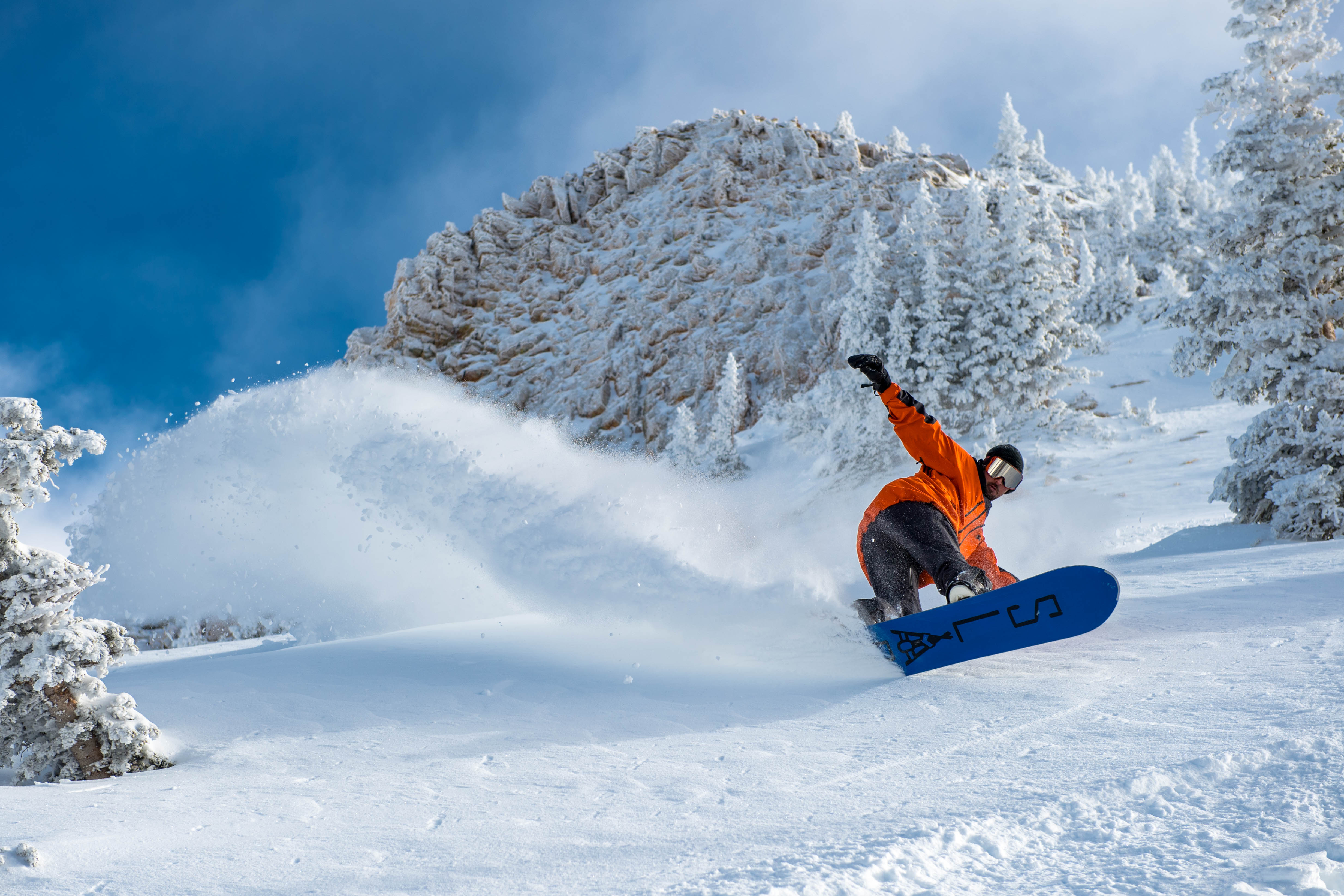
My First Powder Day in the Alps
It was 7:00 AM in Chamonix, and I was standing in the lift line, my boots cramping slightly as I shifted my weight from foot to foot. The air was crisp, -8°C, and the sky was a perfect shade of blue that only the Alps seem to produce. I'd been dreaming of this moment for months - my first real powder day in the birthplace of alpine snowboarding.
As the lift ascended toward the Aiguille du Midi, I could feel my excitement building. Below me, the valley was still blanketed in a soft layer of fog, but up here, the world was bright and white. When the lift finally deposited me at the top, I stepped off and paused for a moment, taking in the view of Mont Blanc towering above me. This wasn't just snowboarding - this was a religious experience.
That day changed everything for me. I spent the next week chasing powder across the Alps, from Verbier's wide-open bowls to St. Anton's tree-lined glades. Over the years, I've returned dozens of times, learning the ins and outs of different resorts, the best times to visit, and the mistakes every powder hound should avoid.
These recommendations won't guarantee the perfect powder day every time - weather and conditions are always unpredictable in the mountains. But they're based on years of firsthand experience, both the triumphant days when I found waist-deep powder and the humbling days when I got lost in a whiteout or spent hours digging out my board from a tree well.
My Top Alpine Snowboarding Resorts
After years of exploring the Alps, these are the resorts that have left the biggest impression on me - each with its own unique character and terrain:
Chamonix, France
My take: Chamonix isn't for the faint of heart, but it's where I had my most memorable powder days. The Aiguille du Midi lift takes you to 3,842 meters, and from there, the possibilities are endless.
Best for: Advanced riders looking for steep, technical terrain and backcountry access
Pro tip: Hire a local guide if you're venturing off-piste - the terrain here is unforgiving, and I've gotten myself into tricky situations more than once trying to navigate without local knowledge.
Apres-ski: The bars in town are lively, but nothing beats warming up with a vin chaud at one of the mountain huts after a long day.
Verbier, Switzerland
My take: Verbier is where I go when I want to combine great riding with a vibrant social scene. The off-piste terrain here is some of the best in Europe, especially after a fresh snowfall.
Best for: Intermediate to advanced riders who want a balance of great terrain and nightlife
Pro tip: Head to the Mont Fort area early in the morning - the bowls there hold powder longer than other parts of the resort.
Mistake I made: I once tried to hike back to the resort after a backcountry run and got lost. Always carry a map and compass, even if you think you know the area.
St. Anton, Austria
My take: St. Anton has a unique charm that keeps me coming back. The tree-lined runs are perfect on overcast days, and the apres-ski scene is legendary.
Best for: Intermediate riders who enjoy tree skiing and lively evenings
Pro tip: Don't miss the guided off-piste tours - the local guides know secret stashes that aren't marked on any map.
Local favorite: The Mooserwirt is the place to be after skiing - just be prepared for crowds and loud music.
Val d'Isere, France
My take: Val d'Isere is where I go when I want variety. The Espace Killy ski area is massive, with everything from gentle blues to challenging blacks.
Best for: All skill levels, especially those who want to cover a lot of terrain
Pro tip: The Solaise area has some of the best morning powder, so start your day there if it's snowed recently.
What surprised me: How quiet the resort feels despite its size - you can always find a run with no one else on it if you explore a bit.
Mayrhofen, Austria
My take: Mayrhofen is a freestyle haven. The terrain park here is world-class, and the superpipe is one of the best I've ever ridden.
Best for: Freestyle riders and beginners
Pro tip: The Penken Park has something for everyone, from small jumps for beginners to big kickers for pros.
Hidden gem: The tree runs off the Ahornspitze lift - they're not as famous as the park, but they're fantastic on powder days.
Courchevel, France
My take: Courchevel is where I go when I want a bit of luxury. The grooming is impeccable, and the facilities are top-notch.
Best for: Families and riders who appreciate comfort and convenience
Pro tip: The Belvedere area has some of the best intermediate terrain, with stunning views of the surrounding peaks.
What to know: Courchevel is more expensive than most Alpine resorts, but the quality of the experience makes it worth it for special trips.
Terrain for Every Skill Level
The Alps have terrain for snowboarders of all skill levels:
- Beginner: Gentle slopes with wide runs, such as those in Saas-Fee (Switzerland) or Obergurgl (Austria).
- Intermediate: Moderate slopes with groomed runs and some off-piste opportunities, such as those in Zermatt (Switzerland).
- Advanced: Steep slopes, moguls, and challenging off-piste terrain, such as those in St. Moritz (Switzerland) or Cortina d'Ampezzo (Italy).
- Expert: Extreme terrain, including backcountry lines and cliffs, such as those in Chamonix (France).
Terrain Parks
Many Alpine resorts have excellent terrain parks for freestyle snowboarders:
- Laax (Switzerland): Home to one of the largest terrain parks in Europe, with multiple parks for different skill levels.
- Mayrhofen (Austria): Known for its Superpipe and excellent freestyle facilities.
- Baqueira-Beret (Spain): Offers a variety of terrain parks and halfpipes.
- Les Deux Alpes (France): Has a large terrain park and a permanent halfpipe.
When to Visit: My Seasonal Guide
After years of visiting the Alps at different times of the season, here's what I've learned about the best times to go:
Early Season (December)
Pros: Less crowded, lower prices, festive atmosphere
Cons: Variable snow conditions, some lifts and runs may not be open
My experience: I once visited Verbier in early December and got lucky with fresh snow, but I've also been to St. Anton that time of year and found most of the off-piste terrain closed.
Pro tip: Stick to higher-altitude resorts like Saas-Fee or Zermatt, which have better early-season snow.
Mid-Season (January-February)
Pros: Most consistent snow conditions, all lifts and runs open
Cons: Crowded, higher prices, cold temperatures
My experience: This is when I've had my best powder days, especially in late January. The cold temperatures keep the snow light and dry.
Pro tip: Book accommodation well in advance - mid-season is peak time, and places fill up quickly.
Late Season (March-April)
Pros: Longer days, milder temperatures, still good snow
Cons: Warmer temperatures can lead to slushy conditions by afternoon
My experience: I love late March in the Alps - the weather is often sunny, the snow is still good in the mornings, and the après-ski scene is lively.
Pro tip: Start early and take breaks in the afternoon when the snow gets slushy. The morning corduroy is usually perfect.
Spring Season (May-June)
Pros: Very quiet, great deals on accommodation, beautiful alpine wildflowers
Cons: Limited terrain, mostly higher-altitude runs open
My experience: I've skied in Zermatt in late May and enjoyed nearly empty slopes, but the snow was only good on the upper mountain.
Best for: Spring skiing enthusiasts who don't mind limited terrain
My Essential Alpine Snowboarding Gear
After years of experimenting with different gear in the Alps, here's what I consider essential - and what I've learned the hard way to leave at home:
Board and Bindings
What I use: I switch between a all-mountain board for most days and a powder-specific board when the snow is deep. For the Alps, I prefer a slightly stiffer board that can handle variable conditions.
Pro tip: If you're renting, don't just go for the cheapest option. I once rented a beat-up board in St. Anton that had a cracked edge - it ruined my entire day.
For powder days: A wider board with a rocker profile makes a huge difference. I resisted buying one for years, but now I wouldn't hit deep powder without it.
Boots
What I look for: Comfort is key - you'll be in these for 6-8 hours a day. I prefer a medium-stiff flex that offers good support without being too restrictive.
Mistake I made: I once bought boots that were too tight, thinking they'd break in. After two days of agony in Chamonix, I had to buy a new pair at full price.
Pro tip: Wear the socks you'll actually snowboard in when trying on boots. Thick ski socks make a big difference in fit.
Outerwear
What I recommend: Invest in a good waterproof, breathable jacket and pants. The Alps can throw everything at you in one day - sun, snow, wind, and rain.
What I use: A 3-layer system: moisture-wicking base layer, insulating mid-layer, and waterproof outer layer. This allows me to adjust to changing conditions.
Pro tip: Look for jackets with pit zips - they're a game-changer when you're working up a sweat on a long traverse. For more tips on packing the right gear for cold-weather adventures, check out our guide on essential winter travel gear.
Accessories That Matter
- Helmet: Non-negotiable. I've taken a few spills that would have been serious without one.
- Goggles: Bring two lenses - one for bright days, one for flat light. I once spent a day in Verbier with the wrong lens and could barely see the terrain.
- Gloves: Mittens are warmer, but gloves offer more dexterity. I bring both and switch depending on conditions.
- Neck gaiter: The most underrated piece of gear. It keeps your face warm and protects against windburn.
- Backpack: A small, lightweight pack with a hydration bladder is perfect. I always carry water, snacks, a first aid kit, and extra layers.
Off-Piste Essentials
If you're venturing off-piste, these items could save your life:
- Avalanche beacon: Make sure you know how to use it before you go.
- Probe and shovel: Practice using these - in an emergency, every second counts.
- Map and compass: Don't rely solely on your phone - batteries die in cold weather.
- First aid kit: At minimum, carry bandages, antiseptic, and pain relievers.
Important: These tools are useless if you don't know how to use them. Take an avalanche safety course before venturing off-piste - I did, and it's one of the best investments I've made in my snowboarding career.
My Alpine Snowboarding Safety Rules
Safety in the mountains isn't just a checklist - it's a mindset. Here's what I've learned about staying safe while chasing powder in the Alps:
The Non-Negotiables
- Always wear a helmet: I've had two significant crashes in the Alps that would have resulted in serious head injuries without a helmet. It's not worth the risk.
- Check avalanche forecasts daily: I start every morning by checking the local avalanche report. Conditions can change dramatically overnight.
- Never ride alone off-piste: I learned this the hard way when I got stuck in deep powder near Verbier and had to dig myself out alone. It took hours.
- Know your limits: I once tried a run in Chamonix that was way beyond my ability. I ended up hiking down most of it, exhausted and scared. Humility is a virtue in the mountains.
Avalanche Safety
What I always carry: Avalanche beacon, probe, shovel, and a first aid kit. These are non-negotiable for any off-piste riding.
Pro tip: Practice using your avalanche equipment regularly. I do a refresher course every season - you don't want to be learning how to use a probe in an emergency.
Mistake I made: I once ignored a "considerable" avalanche risk rating because the sun was shining. I was lucky - I triggered a small slide that only buried my board, but it was a wake-up call.
Weather and Conditions
What to watch for: Rapidly changing weather, whiteouts, and temperature fluctuations can all be dangerous.
My rule: If I can't see the next set of markers, I head back to the resort. I've gotten lost in whiteouts twice, and it's a terrifying experience.
Altitude awareness: The high altitude in the Alps can affect your judgment and physical abilities. Take breaks, drink plenty of water, and know the signs of altitude sickness.
Respect the Mountain
The Alps are beautiful but unforgiving. I've seen experienced riders get into serious trouble because they underestimated the terrain or conditions.
Local knowledge: Hire a guide if you're unfamiliar with an area. Local guides know the terrain, the snow conditions, and the hidden dangers that aren't marked on maps.
Leave no trace: Respect the environment - pack out all your trash, and don't damage vegetation or wildlife habitats.
My Most Embarrassing Alpine Snowboarding Mistakes
Every powder hound has their share of epic fails. Here are mine - and what I learned from them:
The Time I Got Lost in a Whiteout
What happened: I was riding with friends in St. Anton when a sudden whiteout hit. I got separated from the group and couldn't see more than a few feet in front of me.
What I did wrong: I didn't have a map or compass, and I panicked. I kept moving, hoping to find a lift or trail marker.
What happened next: I wandered for nearly two hours before I finally stumbled onto a groomed run. By then, I was cold, exhausted, and had missed the last lift back to the resort.
What I learned: Always carry a map and compass, even on bluebird days. And when the visibility drops, stop moving until you can get your bearings.
The Boot Disaster
What happened: I bought a new pair of boots right before a trip to Chamonix. They felt a little tight in the shop, but I figured they'd break in.
What I did wrong: I didn't test them properly before the trip. I also didn't bring my old boots as a backup.
What happened next: After two days of agony, I couldn't take it anymore. I had to buy a new pair of boots at full price in Chamonix - and they weren't even my first choice.
What I learned: Always break in new gear before a trip. And never travel without backup equipment.
The Avalanche Scare
What happened: I ignored a "considerable" avalanche risk rating because the sun was shining. I was riding off-piste near Verbier when I triggered a small slide.
What I did wrong: I didn't check the avalanche forecast thoroughly, and I was riding alone.
What happened next: The slide only buried my board, but it was enough to scare the daylights out of me. I spent an hour digging it out, and I was shaking for the rest of the day.
What I learned: Avalanche forecasts are there for a reason. Never ride alone off-piste, and always have the proper equipment.
The Epic Faceplant
What happened: I was showing off for some friends in Courchevel, trying a run that was way beyond my ability.
What I did wrong: I let my ego get the best of me. I didn't assess the terrain properly, and I was going too fast.
What happened next: I hit a patch of ice and did a spectacular faceplant. I slid for nearly 50 meters, and my goggles flew off. I was lucky I wasn't hurt, but I was incredibly embarrassed.
What I learned: Humility is a virtue in the mountains. Stick to terrain that's within your ability level, and don't ride beyond your limits just to impress others.
Apres-Ski Scene: My Favorites
After a long day on the slopes, there's nothing better than unwinding with good company and a cold drink. Here are my favorite apres-ski spots in the Alps:
Chamonix, France
Le Refuge du Gouter: A cozy mountain hut at the top of the Aiguille du Midi. The hot chocolate here is legendary, and the views are unbeatable.
Le Ski Club Chamonix: A historic bar in town with a lively atmosphere and great local beer.
Verbier, Switzerland
Farinet: The most famous apres-ski spot in Verbier. Expect loud music, dancing on tables, and a lively crowd.
Le Rouge: A more sophisticated option with great wine and cheese boards.
St. Anton, Austria
Mooserwirt: The ultimate apres-ski experience. The party starts early, and it doesn't stop until late.
Arlberg Hospiz: A historic hotel with a beautiful bar and stunning views of the valley.
Pro tip:
Don't overdo it on the apres-ski if you plan to ride the next day. I've made that mistake more than once, and it's not fun being hungover on a snowboard.
Final Thoughts: Is Alpine Snowboarding Right for You?
Snowboarding in the Alps isn't for everyone - it's physically demanding, can be expensive, and comes with inherent risks. But for those who love the mountains and the thrill of carving fresh powder, it's an experience like no other.
These recommendations won't guarantee the perfect trip every time - weather and conditions are always unpredictable in the mountains. But they're based on years of firsthand experience, both the triumphant days when I found waist-deep powder and the humbling days when I got lost in a whiteout or spent hours digging out my board from a tree well.
Remember that safety should always be your top priority. The mountains are beautiful but unforgiving, and even experienced riders can get into trouble.
If you're considering a snowboarding trip to the Alps, start small, do your research, and don't be afraid to ask for help. For more tips on planning your perfect mountain adventure, check out our guide on planning a winter road trip. And if you're looking for other adventure activities to complement your snowboarding, our guide on canyoning in New Zealand offers some great inspiration for your next trip.
And most importantly, have fun - there's nothing quite like standing atop a mountain, looking out at the stunning Alpine scenery, and knowing that your next run could be the best one of your life.
Author Bio
About Robert Brown
Robert Brown is a passionate snowboarder with over 15 years of experience riding in the Alps. He's visited over 20 Alpine resorts across France, Switzerland, Austria, and Italy, chasing powder and learning from his many mistakes along the way.
When he's not on the slopes, Robert writes about snowboarding and adventure travel, sharing his experiences and advice to help other riders make the most of their time in the mountains.
Robert's favorite Alpine resort is Chamonix, where he had his first real powder day and continues to find new challenges every time he visits.