Essential Travel Safety Tips for International Trips
After visiting over 25 countries across Asia, Europe, and South America, I've learned that most travel safety issues can be avoided with simple preparation.
Let me start with a confession: I've made my share of travel safety mistakes. On my first solo trip to Rome, I had my wallet stolen while admiring the Colosseum. A few years later in Bangkok, I got lost in a unfamiliar neighborhood after dark, feeling increasingly nervous until a kind local guided me back to my hotel. And who could forget that time in Mexico City when I ate street food without checking reviews and spent two days sick in bed?
These experiences taught me that while international travel is incredibly rewarding, it also requires vigilance and preparation. Over the past 15 years of traveling to 40+ countries, I've learned what works (and what doesn't) when it comes to staying safe abroad. This guide isn't about being paranoid—it's about being smart, so you can focus on the joy of discovery rather than worrying about what might go wrong.
Who This Guide Is For
This guide is designed for first-time international travelers, solo travelers, and anyone visiting unfamiliar destinations. Whether you're planning your first trip abroad, exploring a new continent, or simply want to refresh your travel safety knowledge, the advice here is tailored to help you navigate the world with confidence.
My Wake-Up Call: Why Travel Safety Matters
That Rome incident was my first real travel safety lesson. I had my wallet in my back pocket, was completely absorbed in taking photos, and didn't notice the two teenagers working together to pickpocket me. I lost all my cash, my credit cards, and my favorite leather wallet. What made it worse? I didn't have digital copies of my passport or travel insurance details readily accessible.
It took hours at the police station and another full day at the US Embassy to get a temporary passport. I missed my planned day trip to Pompeii and spent much of my remaining time dealing with canceled cards and replacing documents. That's when I realized: a little preparation could have prevented all of this.
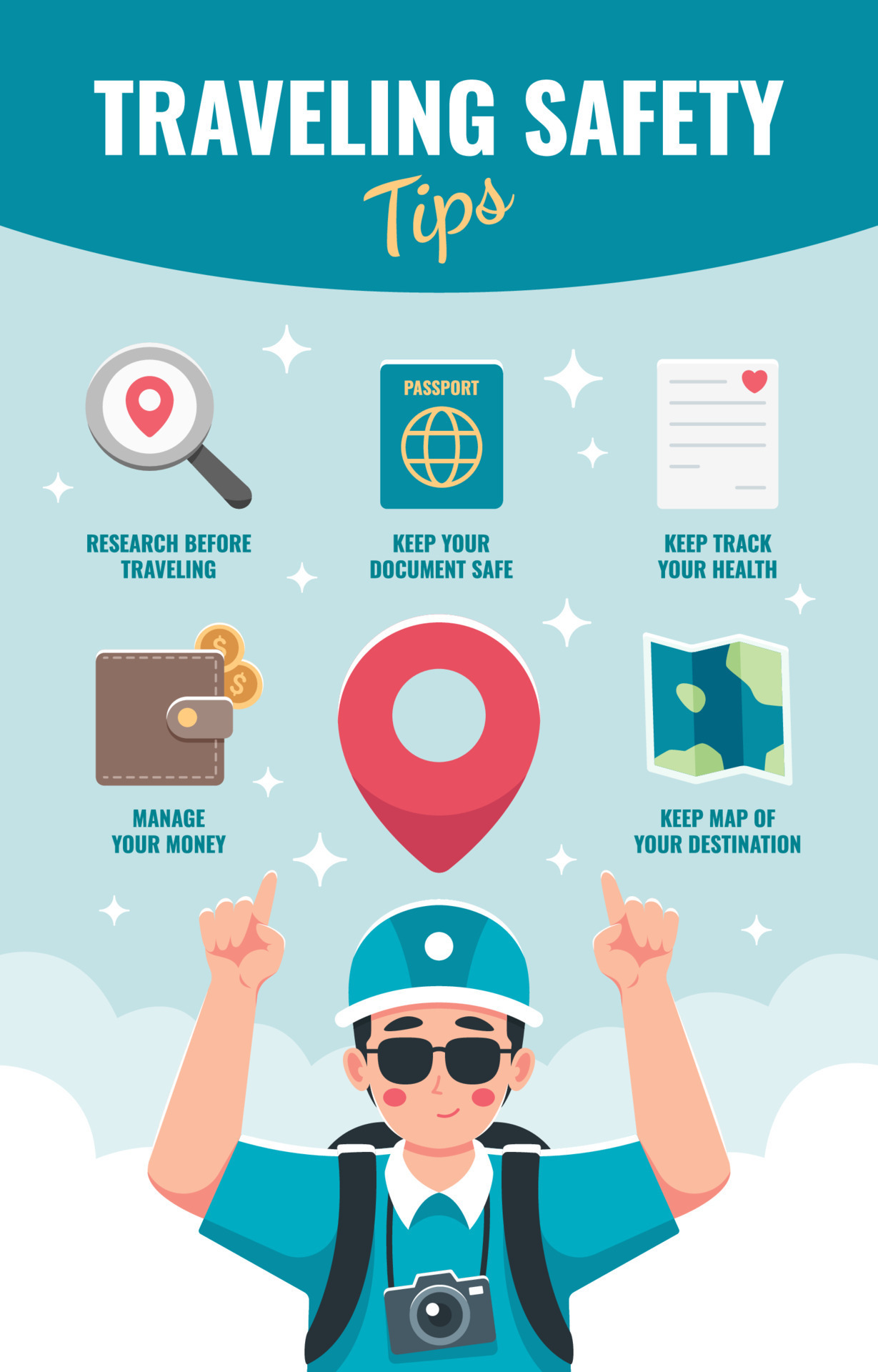
1. Thoroughly Research Your Destination (But Don't Overdo It)
Before my trip to Istanbul last year, I spent hours reading travel forums and government advisories. I learned which neighborhoods to visit during the day vs. night, how to navigate the public transport system, and even basic Turkish phrases for emergencies. This research paid off when I found myself in a minor taxi dispute—knowing the typical fare range helped me avoid being overcharged.
But here's the balance: don't let research paralyze you. I once spent so much time reading about potential dangers in Cairo that I almost canceled my trip. When I finally went, I had an amazing experience—just by being aware of my surroundings and following basic precautions.
Pro tip: Check the US State Department or your country's equivalent for travel advisories, but also read recent blog posts from travelers who've been there within the past few months. Official advisories can sometimes be overly cautious.
2. Secure Comprehensive Travel Insurance (I Learned This the Hard Way)
Remember that Mexico City food poisoning incident? That's when travel insurance saved me. After spending two days in my hotel room, I finally went to a local clinic. The bill was $800—more than my entire hotel stay. But because I had comprehensive travel insurance, I got every penny back.
For more detailed information on choosing the right travel insurance policy, check out our How to Choose the Right Travel Insurance Policy.
A good policy should cover:
- Emergency medical care (this is non-negotiable)
- Trip cancellations or interruptions
- Lost or delayed luggage
- Emergency evacuation (especially important for remote destinations)
- Adventure activities if you plan to do them
I once met a traveler in Thailand who broke his leg hiking. Without insurance, his medical evacuation cost over $20,000. Don't let that be you.
3. Register with Your Embassy (A Simple Step That Could Save Your Life)
A few years ago, I was in Tokyo when a major earthquake struck. It wasn't devastating in the city center, but it was enough to rattle everyone. Within hours, I received an email from the US Embassy with safety instructions and a check-in link. That simple registration made me feel so much safer.
Most countries offer traveler enrollment programs that take just 5 minutes to complete. They allow your embassy to contact you during natural disasters, political unrest, or other emergencies. It's one of those things you don't think about until you need it.
4. Safeguard Your Important Documents (My Digital Backup System)
After the Rome wallet theft, I developed a document security system that I use for every trip:
- Scan all important documents (passport, visa, insurance, credit cards)
- Save them to a password-protected cloud storage service
- Email a copy to myself
- Keep a physical copy in a separate location from the originals (I use a hidden pocket in my luggage)
On my last trip to Vietnam, I left my passport in a taxi. Thanks to my digital copies, I was able to get a replacement at the embassy much faster. The taxi driver even returned my passport later—he found my email in the cloud storage link I provided to the taxi company.
5. Stay Alert in Crowded Areas (The "Tourist Bubble" Is a Real Risk)
When I'm exploring popular tourist spots, I often see travelers so focused on taking photos that they're completely unaware of their surroundings. I was that person in Rome, and it cost me.
Now, I follow these rules in crowded areas:
- Wear a neck pouch under my clothes for valuables
- Keep my phone in a front pocket with a zipper
- Use a cross-body bag that I can keep in front of me
- Be extra cautious when someone tries to distract me (a common pickpocket technique)
In Barcelona's La Rambla last summer, I watched a group of pickpockets work the crowded pedestrian street. One would approach tourists with a map, asking for directions, while their partner slipped a hand into the tourist's backpack. I was able to warn a family just in time—they thanked me profusely as they realized someone had already unzipped their bag.
6. Choose Safe and Reliable Transportation (My Nightmare Uber Story)
In Buenos Aires a few years ago, I made the mistake of getting into an unmarked car that claimed to be an Uber. Halfway to my destination, the driver took a wrong turn into a dark neighborhood and started asking for more money. I was terrified.
Thankfully, I had shared my trip details with a friend back home, who could see my location on Find My Friends. When I texted her quietly, she called me immediately. I put her on speakerphone and pretended to be talking to a local friend who knew where I was. The driver quickly changed course and took me to my hotel.
Just last month in Paris, I witnessed a similar situation at Charles de Gaulle Airport. A tourist got into an unlicensed taxi that quoted him €20 to the city center but demanded €80 upon arrival. Always verify your ride before getting in.
Now I always:
- Only use licensed taxis or verified ride-hailing services
- Check the driver's photo and license plate before getting in
- Share my trip details with someone I trust
- Avoid riding alone at night if possible
7. Protect Your Data and Digital Privacy (I Got Hacked Once)
On a trip to Prague, I used a public Wi-Fi network in a café to check my bank account. A week later, I noticed unauthorized charges on my card. My bank told me my information had likely been stolen through that unsecured network.
Now I never access sensitive information on public Wi-Fi. I use a VPN for all internet browsing abroad, and I notify my bank before traveling to avoid legitimate charges being flagged as fraud.
Pro tip: Consider getting a travel-friendly credit card with no foreign transaction fees and fraud protection. I use one specifically for travel, which makes it easier to track expenses and cancel if needed.
8. Learn Basic Local Phrases (Even Just a Few Words Go a Long Way)
In rural Vietnam, I got lost while trying to find a local market. I didn't speak a word of Vietnamese, but I knew how to say "help" and "market" in basic phrases. A kind local woman not only pointed me in the right direction but also walked me part of the way there.
Learning even a few key phrases shows respect for the local culture and can be invaluable in emergencies. I use the Google Translate app with offline language packs for more complex conversations.
9. Be Mindful of Local Laws and Customs (My Embarrassing Mistake in Dubai)
A few years ago, I visited Dubai during Ramadan. I didn't realize that eating or drinking in public during daylight hours is frowned upon (and technically illegal in some places). I was sitting in a park eating a sandwich when a local police officer gently reminded me of the custom.
I was mortified—but the officer was kind about it. That experience taught me to always research local customs before traveling, especially during religious holidays or in conservative countries.
Other common cultural considerations:
- Dress codes in religious sites (cover shoulders and knees)
- Photography restrictions (many government buildings and military areas)
- Public displays of affection (often frowned upon in many countries)
- Greeting customs (handshakes vs. bowing vs. cheek kisses)
10. Trust Your Intuition (It's Your Best Safety Tool)
In Marrakech, I was invited to a "traditional dinner" by a local who approached me in the medina. Something felt off—his price was too low, and he was being overly pushy. I politely declined and walked away.
Later, I learned from other travelers that these "dinners" often end with aggressive price increases or pressure to buy overpriced goods. My gut feeling saved me from a potentially unpleasant situation.
For more safety tips specifically for solo travelers, read our Travel Safety Checklist for Solo Travelers guide.
Here's the thing: if a situation feels unsafe or uncomfortable, it probably is. Don't worry about being rude—your safety is more important. I've walked away from taxis, restaurants, and tours when something didn't feel right, and I've never regretted it.
Real-Life Emergency: What I Did When I Broke My Ankle in Nepal
Last year, while hiking in the Annapurna region of Nepal, I slipped on a wet rock and broke my ankle. It was a remote area, hours from the nearest hospital.
Here's how I handled it:
- Stayed calm: Panicking would have only made the situation worse.
- Used my first aid kit: I had a basic kit with bandages and pain relievers, which helped stabilize my ankle and manage the pain.
- Contacted my travel insurance: They arranged for a rescue helicopter to pick me up.
- Followed medical advice: I went to a hospital in Kathmandu recommended by my insurance, then flew home for surgery.
The whole experience was stressful, but because I was prepared, I got the help I needed quickly. My travel insurance covered all medical costs, including the helicopter evacuation.
My Travel Safety Philosophy
After all these experiences, here's what I've learned: travel safety isn't about avoiding all risk—it's about being prepared and making smart choices. The most memorable trips often involve a little adventure, but that doesn't mean you have to be reckless.
I still get lost sometimes. I still make mistakes. But I've learned to view these as part of the travel experience, not as failures. The key is to learn from them and adjust your approach.
Final Safety Checklist (Based on My Mistakes)
- ✅ Enable location sharing with a trusted person
- ✅ Carry a portable power bank (I once got lost in Paris with a dead phone)
- ✅ Keep a small first-aid kit in your day bag
- ✅ Avoid wearing flashy jewelry (I learned this in Venice)
- ✅ Stay hydrated and rest well (tired travelers make bad decisions)
- ✅ Make copies of all important documents
- ✅ Research local emergency numbers
- ✅ Trust your instincts—always
Remember: the goal of travel is to create wonderful memories. By taking these precautions, you'll be free to focus on the experiences that make international travel so special. I've had some of the best times of my life exploring new countries, and with a little preparation, you will too.
Now go out there and adventure—safely!
About the Author
James Wilson is a frequent international traveler who focuses on travel safety, planning, and risk awareness for independent travelers. With over 15 years of experience visiting 40+ countries across Asia, Europe, and South America, he combines personal experience with research to create practical, reliable travel advice.